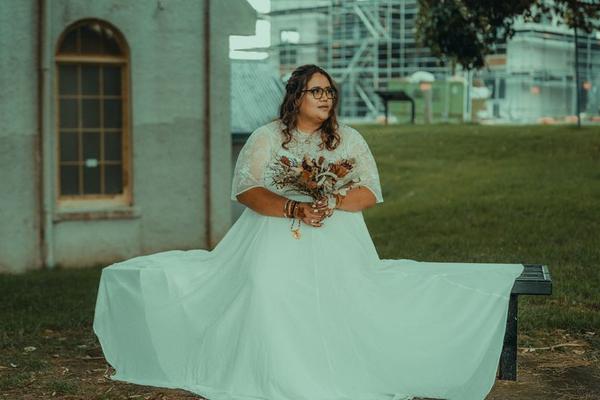
Shopping for plus size wedding dresses should start with how a gown feels on your body, not a list of silhouettes someone says you should avoid. The right dress lets you breathe, sit, walk, hug people and enjoy the reception without repeatedly adjusting the neckline.
Think of fit as a combination of three things: where the dress carries its weight, how the fabric follows your proportions, and what happens when you move. Those details make it easier to compare curvy bridal gowns beyond their photographs.
Start With Fit, Not the Size Label
Bridal sizes are not standardized across designers and can differ from everyday clothing. Have your bust, natural waist and fullest hip measured, then compare those measurements with the specific designer’s chart.
If your measurements fall into different sizes, ask the salon which measurement controls the fit of that design. A fitted skirt needs enough hip room; a structured bodice needs appropriate bust and waist proportions. Many gowns are ordered to accommodate the largest relevant measurement and then adjusted, but the best choice depends on the cut and available seam allowance.
Do not judge a sample gown by how well it zips. Bridal samples are often clipped during appointments. What matters is whether the construction can be fitted properly in your ordered size.
Where a Supportive Wedding Dress Gets Its Structure
Look Inside the Bodice
A supportive gown works from the inside out. Lining, well-placed seams, boning and an appropriately fitted waist help the bodice retain its shape. Wider straps may provide stability, but straps alone should not have to carry all the weight of the bust or skirt.
Ask your stylist to show you the inside of each dress. Does the bodice stay in place when you lift your arms? Does the neckline lie flat when you bend forward? Is the waist seam sitting where intended, or riding upward?
Built-In Cups Are Not a Universal Solution
Some plus size bridal dresses come with sewn-in cups or corset-style construction. These features can help, but cup shape and placement may not suit every bust. A seamstress may be able to replace cups, add internal support or refine the neckline. Discuss these possibilities before buying, especially with sheer or embellished bodices.
If you plan to wear a bra, check the back and neckline in person. A higher back or wider shoulder coverage may make your preferred undergarments easier to wear. Shapewear is optional, not a prerequisite for a flattering fit.
Choose a Silhouette for Your Proportions and Priorities
A-Line and Ball Gown
An A-line skirt gradually widens from the waist, allowing room through the hips. A ball gown creates a more dramatic skirt shape. Neither style is automatically better for every figure: pay attention to waist placement, skirt weight and how easily you can sit.
Fit-and-Flare and Mermaid
These shapes trace the body before widening lower down. A fit-and-flare may provide more walking room than a mermaid design that stays narrow toward the knees, although cuts vary. Take a few steps and sit before deciding. You should never need to restrict normal movement to make a silhouette work.
Sheath and Empire Waist
A sheath follows a relatively straight line and can feel light in softer fabrics. An empire waist begins below the bust and falls away from the midsection. For both, inspect where fabric pulls and whether the bust has independent support. The most successful wedding dress fit for curves often comes from construction rather than a silhouette name.
Fabric, Neckline and Proportion Change the Whole Look
Structured satin, mikado and some crepes give a gown a defined outline, while chiffon and tulle create softer movement. Lace, beading and layered fabric affect weight, texture and transparency. Check whether the lining provides the coverage you want.
Necklines deserve equal attention. A square or sweetheart neckline frames the upper body differently from a V-neck or off-shoulder shape. None is a rule for a body type. Consider the depth, strap position and whether you can lean over comfortably without adjusting the dress.
Height and torso length also influence proportion. A waist seam that sits beautifully on a mannequin may land too high or low on you. Ask whether it can be repositioned; moving embellished seams can be costly.
Make the Fitting Room a Real-World Test
Imagine choosing between two dresses. One looks striking while you stand still but slips at the bust whenever you raise your arms. The other has a simpler neckline, stays secure through movement and leaves room for a full breath. The second gown may give you more confidence throughout your wedding day.
At every appointment, take a movement test: sit in a chair, walk several metres, turn, lift your arms for a hug and bend slightly to pick something up. Note pinching, rubbing or gaping. Ask which issues alterations can realistically correct and which are built into the design.
When booking, ask what plus-size sample sizes are physically available to try on, rather than only what sizes can be ordered. Request styles with the support and coverage you prefer. You deserve to assess real dresses, not just imagine how an undersized sample might look.
Plan Alterations Before You Commit
Most wedding gowns need some adjustment, even when ordered from accurate measurements. Common alterations include hemming, refining the bust or waist, adjusting straps and adding a bustle for a train. Rebuilding a neckline or changing structural seams may not be practical for every dress.
Bring your intended shoes and undergarments to fittings because heel height and foundation layers affect the final shape. Ask for an alterations estimate and schedule early; several appointments may be needed. If your measurements change, contact the fitter rather than assuming every gown can be resized substantially.
For further preparation, explore advice on choosing bridal undergarments and understanding wedding dress alterations before finalizing your purchase.
Frequently Asked Questions
What silhouette is most flattering for a plus-size bride?
There is no single best silhouette. A-line, ball gown, sheath and fitted designs can all look beautiful. Choose by support, comfort, personal style and how the gown moves on your body.
Should I order my usual clothing size?
No. Have your measurements taken and use the designer’s bridal size chart. Ask a bridal specialist which measurement matters most for the gown you are purchasing.
Do I need shapewear under a wedding dress?
Not necessarily. A properly structured gown may provide the support you want on its own. Wear shapewear only if you like the feel and it works comfortably with the dress.
Can alterations fix a dress that feels unsupportive?
Some fit problems can improve with cup adjustments, strap changes or bodice tailoring. However, alterations cannot always overcome unsuitable construction, so ask a qualified fitter before ordering.
Choose the Dress You Can Celebrate In
The strongest choice among plus size wedding dresses is the one that feels secure, suits your style and lets you move naturally. Compare structure as carefully as sparkle, check proportions rather than labels, and budget for skilled alterations. Your gown should work with your body throughout the day, not demand constant attention from you.