
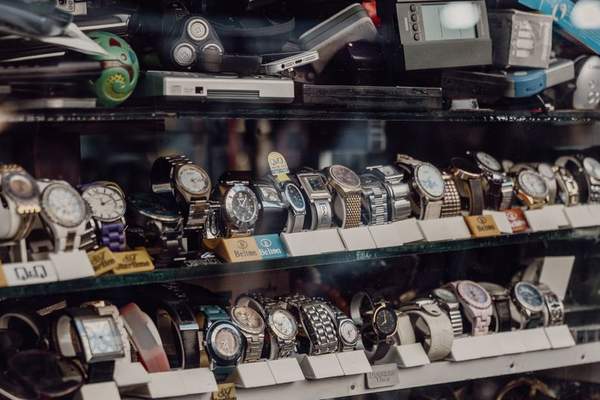
A watch can have a sensible diameter on paper and still feel awkward on your wrist. That is because the case measurement printed in a product listing tells only part of the story. Long lugs, a thick case and even the bracelet can make a modest-looking watch wear surprisingly large. This watch case sizes guide explains the measurements worth checking before you buy.
Start With Four Measurements, Not One
Watch diameter is the width of the case, usually measured across its widest horizontal point without the crown. A stated 40 mm diameter does not normally include the winding knob on the side. For non-round cases, manufacturers may describe width and length separately, so check the dimensions rather than assuming a single diameter tells the whole story.
Lug-to-lug length measures from the outer tip of the lug at twelve o’clock to the opposite tip at six o’clock. This is the watch’s footprint along your arm. If those tips extend beyond the relatively flat top of your wrist, the watch may overhang and become uncomfortable or visually top-heavy.
Case thickness is the height from the caseback to the top of the watch, often including the crystal. It influences how the watch sits under a cuff and how prominent it feels. Lug width, measured between the lugs where the strap attaches, is different from lug-to-lug length. It helps you choose a compatible replacement strap, not the right case diameter.
Measure Your Wrist Where You Actually Wear a Watch
Use a flexible measuring tape around your wrist at the position where the watch normally rests, close to but not directly on the wrist bone. Keep the tape snug without squeezing. If you do not have one, wrap a strip of paper around your wrist, mark the overlap and measure the strip with a ruler. Record the result in centimetres or inches.
Next, look at your wrist from above. The flat upper surface matters because two people with the same circumference can have different wrist shapes. A broad, flatter wrist generally accommodates longer lugs more easily than a rounded wrist of similar circumference. When possible, compare the listed lug-to-lug measurement with that usable upper width.
If a watch already fits you well, measure its case diameter and lug-to-lug length. That personal reference is often more useful than any generic wrist size for watches chart. You can then compare new models against something you know is comfortable.
Watch Size Chart: Useful Starting Ranges
There is no universal sizing standard, but these broad ranges can help you narrow a search for traditional round watches. Treat them as visual starting points rather than strict limits.
Wrist Under 15.5 cm (About 6.1 Inches)
Cases around 32–36 mm are a useful place to begin. Compact 37–38 mm designs can also work when their lugs are short and curved downward. Check the actual footprint before ruling out a slightly larger diameter.
Wrist Around 15.5–17 cm (About 6.1–6.7 Inches)
Look first at roughly 35–40 mm cases. A restrained 38 mm dress watch may appear balanced, while a 40 mm sports model with an extended bracelet end link may occupy much more space than expected.
Wrist Around 17–19 cm (About 6.7–7.5 Inches)
Many wearers find options around 38–43 mm worth trying. Short-lug 44 mm watches may fit too, but oversized crowns, broad bezels and substantial thickness can change the experience.
Wrist Above 19 cm (About 7.5 Inches)
Cases around 40–46 mm provide a practical starting selection, although smaller vintage-inspired watches can look excellent as well. A larger wrist is not an obligation to buy a larger dial.
The point of a watch size chart is to filter possibilities, not declare a right or wrong style. Personal taste, wrist shape and the watch’s proportions still determine the final fit.
Why a Smaller Diameter Can Wear Larger
Consider two real specification sheets from Longines. The 40 mm Flagship Classic model L4.984.3.20.7 is listed with a 47 mm lug-to-lug distance and an 8.7 mm thickness. The smaller 38.5 mm Sector Dial model L2.828.4.73.2 is listed at 47.6 mm lug-to-lug and 11 mm thick. Despite its smaller diameter, the Sector Dial extends slightly farther along the wrist and stands noticeably taller.
That comparison captures the main buying lesson: comparing only 40 mm versus 38.5 mm would miss two important differences. Specifications also vary among versions of the same collection, so use the exact model reference rather than assuming every watch in a family fits alike.
Dial, Bezel and Strap Change the Visual Size
A large open dial often appears bigger than a case with a thick diving bezel, even when both share the same diameter. Pale dials can feel expansive, while dark dials may appear more contained. These are visual effects rather than changes to the dimensions.
Straight, projecting lugs emphasize length. Downturned lugs may hug the wrist better. Integrated bracelets and rigid first links sometimes add effective length beyond the published lug-to-lug figure, so product photographs from the side are particularly useful.
Leather straps can conform quickly, whereas some stiff rubber straps resist bending at first. Bracelets also need enough removable links or clasp adjustment to fit securely. If you plan to change the look later, a guide to watch strap materials is a helpful next read, along with how to measure a watch strap correctly.
A Practical Fit Check Before You Order
First, shortlist watches by approximate diameter. Then compare lug-to-lug length, thickness and strap construction. Ask the seller for missing measurements or a side-on wrist photograph. If possible, visit a shop and test similar dimensions before ordering online.
When trying a watch, let your arm relax naturally. The lugs should generally remain supported by the top of your wrist, without pressing sharply against its edges. Rotate your wrist, bend your hand and see whether the case shifts excessively. Slide your usual shirt cuff over it if that matters for daily wear.
Frequently Asked Questions
Is a 40 mm watch too big for a small wrist?
Not necessarily. A 40 mm case with compact, curved lugs may fit better than a 38 mm watch with long, straight lugs. Compare the lug-to-lug span and try the actual design whenever possible.
Does lug-to-lug matter more than diameter?
For physical fit, it is often the more revealing number because it shows how far the case extends along your wrist. Diameter still matters for appearance, but neither measurement tells the whole story alone.
How tight should a watch strap be?
It should hold the watch reasonably steady without digging into your skin. A little movement is normal. Comfort will also change slightly with heat, activity and natural wrist swelling.
Can a thick watch fit a narrow wrist?
Yes, provided the case and lugs sit securely. However, a tall case may feel top-heavy and catch on sleeves more often. Thickness is worth testing separately from diameter.
Choose Proportions You Will Enjoy Wearing
The best size is not automatically the one recommended by a chart. Start with your wrist measurement, check case diameter, lug-to-lug length and thickness, then account for dial design and strap fit. Compare those figures with a watch you already like, and you will make a more confident choice based on comfort rather than a single number.