
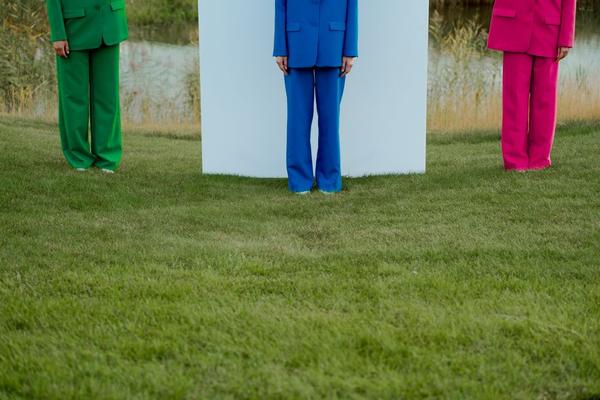
Color blocking looks daring from a distance, but the method is surprisingly simple: choose solid colours, give each one a clear role, and keep the rest of the outfit quiet. You do not need a stylist’s eye or a wardrobe full of neon. The most convincing color blocking outfit ideas often begin with familiar pieces such as a blue shirt, red knit, green trousers, or a bright bag.
The color blocking trend in 2026 feels less like a costume and more like confident everyday dressing. Rich red, clear blue, butter yellow, pink, orange, violet, and green are appearing in clean silhouettes, while denim, cream, brown, and black make stronger shades easier to wear. The aim is not perfect matching. It is creating enough visual connection for the combination to look deliberate.
Start With Two Colours, Not Five
When learning how to color block outfits, begin with two noticeable colours. This gives the eye a simple relationship to understand. A cobalt blouse with tomato-red trousers is bold but clear. A pink cardigan over a green dress works because each colour occupies a separate area rather than competing in a busy print.
Use one colour as the main character and the other as support. A useful ratio is roughly two-thirds of the outfit in the dominant shade and one-third in the accent shade. For example, wear a violet midi dress with a yellow bag and flats. The dress controls the look, while the smaller yellow elements create intentional contrast.
Choose a Colour Relationship That Makes Sense
Try neighbours for a softer result
Colours that sit close together visually tend to blend smoothly. Red with pink, blue with green, or orange with yellow can feel energetic without looking harsh. These pairings are useful for workwear and occasions where you want colour without making the outfit overly loud.
A raspberry shirt with burgundy trousers is an easy example. The shades are not identical, but they belong to the same family. Add tan shoes or a chocolate-brown bag, and the outfit feels polished rather than overly coordinated.
Use opposites for greater impact
Opposing colours create some of the boldest color combinations: blue with orange, violet with yellow, or red with green. The trick is to adjust the intensity. Instead of pairing two equally electric shades, combine one saturated colour with a calmer version of the other. Think royal blue with rust, lilac with mustard, or scarlet with olive.
This keeps the contrast while avoiding a theatrical result. Texture can soften it further: a chunky orange knit with smooth blue tailoring feels more considered than two shiny fabrics in equally bright colours.
Let Neutrals Create Breathing Space
Color blocking does not require every visible item to be colourful. White, cream, grey, navy, denim, camel, and brown can separate strong shades. A white shirt between a red jacket and pink trousers gives each colour a boundary. Blue jeans can ground a lime-green top and purple bag without weakening the idea.
Black creates a sharper, more graphic effect, while cream and brown make bright colours feel warmer. For daytime, try a yellow knit, straight-leg denim, and a green handbag. For evening, switch the denim for black tailored trousers and repeat the green in a shoe or earring.
Related styling ideas worth exploring include building a neutral capsule wardrobe, wearing bright accessories, and mixing fashion colours with denim.
Pay Attention to Where the Colours Meet
The placement of colour changes the balance of an outfit. A bright top with darker trousers draws attention upward, while colourful trousers or a skirt create focus through the lower half. A contrasting long coat creates a vertical frame, which can make an adventurous pairing feel streamlined.
Clean lines help. A fitted red top with wide blue trousers forms two clear blocks. Add a patterned scarf, multicoloured trainers, a detailed bag, and large jewellery, and the colour story becomes harder to read. Keep silhouettes simple when the palette is doing the talking.
Use Accessories as a Low-Risk Test
You do not need to buy two bright garments at once. Start with a solid-colour outfit and add one contrasting item: a green bag with a pink dress, red shoes with a blue suit, or a yellow scarf with a purple jumper.
Try this five-minute test. Put on the colourful item you find hardest to style. Hold three accessories beside it in daylight and take a phone photo of each option. Photos flatten the scene and make balance easier to judge than a mirror does. Choose the pairing that makes the main garment look clearer rather than duller or excessively intense.
Repeat One Shade to Finish the Look
A small colour echo can connect separate parts of an outfit. If you wear an orange skirt with a blue shirt, repeat orange in a hair clip, lipstick, bag detail, or shoe. The pieces do not need to match exactly; a related shade often looks more modern.
Avoid repeating every colour in several places, which can appear overplanned. One subtle echo is enough for the eye to read the combination as intentional.
Common Color Blocking Mistakes
The first mistake is treating brightness as the only requirement. Two vivid colours can still feel disconnected if their undertones, proportions, and fabrics fight each other. The second is adding too many statement elements. Strong colours, dramatic volume, heavy texture, and bold print can all work, but using them together requires more control.
Another mistake is judging the outfit piece by piece. Step several feet away from the mirror or take a full-length photo. Check whether one area looks unusually heavy and whether the colours are distributed clearly. Removing one accessory often improves the result more than adding another.
FAQ
What colours work best for color blocking?
Reliable starting points include red and pink, blue and green, violet and yellow, orange and blue, and yellow and green. Adjusting the shade intensity can make any pairing easier to wear.
Can you color block with neutral colours?
Yes. Cream with camel, navy with grey, or chocolate brown with soft blue creates a quieter version. The effect comes from distinct blocks of solid colour, not brightness alone.
How many colours should an outfit include?
Two colours are easiest for everyday dressing. A third can work as a small accent through shoes, a bag, or jewellery. More than three usually requires very simple shapes and careful proportion.
Can color blocking work for office outfits?
Yes. Use tailored shapes and softened shades, such as burgundy with blush, teal with navy, or rust with blue. Keep accessories structured and limit the outfit to two main colours for a professional finish.
Make the Combination Look Like You
The best color blocking outfit ideas do not depend on memorising a strict colour wheel. Choose one colour you enjoy, add a second shade with a clear relationship, and control the proportions. Start with two colours, use a neutral when the contrast feels intense, and repeat one shade in a small detail. Once the structure is right, bold colour stops feeling risky and becomes a practical styling tool.