Children’s fashion changes quickly, but not only because new colours, prints, and silhouettes arrive each season. A child’s clothing needs can shift dramatically within a few years. Babies need softness and easy fastenings, younger children need freedom to play, and teenagers often use clothes to communicate who they are.
Looking at kids fashion trends by age helps make sense of these changing priorities. The most successful trends are rarely about appearance alone. They reflect growing independence, changing routines, physical development, and the gradual discovery of personal style. What works beautifully for a toddler may feel completely wrong for a tween, even when both garments look fashionable on the hanger.
Baby Fashion Focuses on Softness and Simplicity
During the first year, comfort leads almost every clothing decision. Babies spend much of their time sleeping, feeding, crawling, or being carried, so stiff fabrics and complicated designs have little practical value.
Soft cotton bodysuits, relaxed sleepsuits, knitted cardigans, and stretchy trousers remain dependable choices. Current baby fashion often leans towards gentle colours such as sage green, muted blue, warm cream, dusty pink, and soft yellow. Earth-inspired shades have become especially common because they are easy to mix and can be passed between siblings without feeling too specific.
Small prints featuring clouds, fruit, flowers, stars, or woodland scenes add personality without overwhelming an outfit. Ribbed fabrics and subtle textures are also popular, giving basic garments a more thoughtful appearance.
Practical details still matter more than decoration. Envelope necklines, snap fastenings, elasticated waists, and wide openings make changing easier. An outfit may look charming in a photograph, but if it takes ten minutes to remove, it probably will not become a family favourite.
Toddler Clothing Is Designed for Constant Movement
Once children begin walking, climbing, and exploring, their clothes face a completely different test. Toddler fashion needs to survive playgrounds, snack spills, unexpected puddles, and the firm belief that every piece of furniture should be climbed.
Relaxed joggers, leggings, roomy sweatshirts, dungarees, and soft denim suit this energetic stage. Oversized shapes have also influenced toddler wardrobes, although the fit should never become so loose that it interferes with movement. The best pieces offer space without looking awkward.
Cheerful colour blocking is a strong trend for toddlers. Bright green, orange, cobalt blue, red, and sunny yellow often appear alongside softer neutral shades. Playful prints remain popular too, especially dinosaurs, vehicles, animals, rainbows, and hand-drawn patterns.
At this age, children may begin expressing surprisingly strong opinions. A toddler who wants to wear the same striped jumper every day is already developing a sense of preference. Allowing small choices can make getting dressed easier while encouraging independence.
Preschool Style Balances Playfulness and Practicality
Preschool children usually want clothing that feels fun, but their days also require practical outfits for painting, outdoor play, naps, and messy meals. This is where washable fabrics become essential.
Matching sets have become common among preschool-age children. Coordinated sweatshirts and joggers create a neat appearance while still feeling comfortable. They also simplify morning routines because the outfit is already planned. However, separates that can be mixed with other garments generally provide better long-term value.
Graphic tops are especially popular during these years. Children often enjoy wearing clothes that show their interests, whether that means space, insects, football, dance, sea creatures, or favourite colours. Fashion becomes a small form of storytelling.
Layering also grows more important. Lightweight jackets, zip-up hoodies, cardigans, and long-sleeved tops can adapt to changing temperatures throughout the day. Preschoolers may not notice that they are cold until they are very cold, so removable layers are usually more useful than one heavy garment.
Early School Years Bring More Independence
Starting school changes a child’s relationship with clothing. Even where uniforms are required, children become more aware of what classmates wear during breaks, activity days, parties, and weekends. They may also begin noticing which colours or styles make them feel confident.
Among early school-age children, casual sports-inspired clothing remains influential. Sweatshirts, trainers, track pants, varsity-style jackets, and relaxed T-shirts combine comfort with a slightly older look. These pieces are easy to move in and generally handle active routines well.
Wide-leg trousers, cargo-inspired bottoms, and loose jeans have also moved into children’s collections. For younger wearers, these styles work best when the waist fits securely and the hem does not drag. Adjustable waistbands are particularly helpful because children of the same age can have very different proportions.
Accessories begin to matter more during this stage. A colourful backpack, patterned socks, a cap, or a favourite pair of trainers may become the most important part of an outfit. These smaller choices allow children to show personality without requiring an entirely new wardrobe.
Older Children Prefer Clothes That Feel Less Childish
As children approach the later primary school years, many start rejecting anything they consider too young. Cartoon characters may disappear from their wardrobes, replaced by cleaner graphics, subtle logos, textured fabrics, and more mature colour combinations.
Relaxed streetwear has a strong influence at this age. Hoodies, loose jeans, cargo trousers, simple trainers, and layered T-shirts are common choices. The overall look tends to feel casual and unforced. Comfort remains important, but older children often pay closer attention to shape, colour, and how an outfit compares with what their friends are wearing.
This stage can be tricky for parents. Children are growing quickly, yet they may have very specific ideas about style. Listening before buying becomes increasingly important. A perfectly practical coat is not good value if a child refuses to wear it because the colour or fit feels embarrassing.
The best approach is often to build around dependable basics and let the child choose a few distinctive pieces. This gives them some creative control without making every outfit difficult to coordinate.
Tween Fashion Explores Identity
Tween style sits somewhere between childhood and teenage fashion. It is often experimental, inconsistent, and surprisingly personal. A child may love colourful clothing one month and prefer head-to-toe black the next. That uncertainty is a natural part of discovering identity.
Current tween fashion includes oversized sweatshirts, cropped jackets worn over longer layers, wide-leg jeans, cargo trousers, knitted tops, casual dresses, and retro-inspired trainers. Patterns such as checks, stripes, florals, and simple geometric prints offer variety without appearing too childish.
Gender-neutral fashion is especially visible among tweens. Relaxed silhouettes, neutral colours, utility details, and unisex sweatshirts allow young people to choose clothes according to comfort and taste rather than rigid categories.
Fit deserves extra attention during this period because bodies can change rapidly. Soft waistbands, adjustable features, layered outfits, and flexible fabrics can help children feel more comfortable. Fashion should support confidence rather than make physical changes feel more noticeable.
Teen Style Is Shaped by Culture and Community
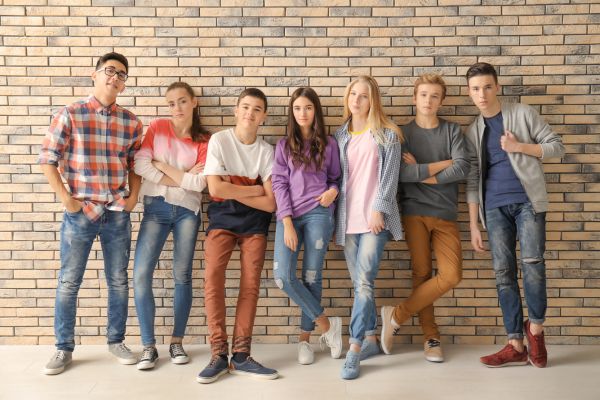
Teenagers rarely experience fashion in isolation. Music, sport, films, social media, gaming, local culture, and friendship groups all influence what feels current. Trends move quickly, but teenagers often adapt them rather than copying a complete look.
Some prefer minimalist outfits built from neutral T-shirts, straight jeans, and clean trainers. Others lean towards vintage clothing, athletic wear, bold streetwear, romantic fabrics, or alternative styles. There is no single teenage uniform, even when certain items become widely popular.
Second-hand and vintage fashion have also become meaningful parts of teen style. Thrifted jackets, older denim, retro sportswear, and reworked accessories can make outfits feel individual. The appeal is not purely financial. Wearing something unusual offers a way to step outside mass-produced trends.
Teenagers generally benefit from having control over their appearance, within reasonable limits for weather, school rules, and budget. Clothes can provide a manageable space for experimentation at an age when many other parts of life feel uncertain.
Trends Should Work With Everyday Life
Understanding kids fashion trends by age does not mean rebuilding a wardrobe whenever a child enters a new stage. Trends are most useful when they fit naturally into everyday routines.
Comfortable basics create the foundation. Seasonal colours, interesting textures, updated trouser shapes, or a new accessory can then make familiar outfits feel current. This approach reduces waste and makes it easier to manage sudden growth spurts.
Durability matters too. Reinforced knees, secure seams, washable fabrics, and well-fitted shoes may not sound exciting, but they determine how clothing performs once it leaves the bedroom mirror and enters real life.
Letting Style Grow With the Child
The clearest lesson from kids fashion trends by age is that clothing gradually shifts from something chosen for a child to something chosen with them, and eventually by them. Babies need softness. Toddlers need movement. School-age children want personality, while tweens and teenagers use fashion to explore identity.
Trends can offer inspiration, but they should never override comfort, practicality, or a child’s preferences. The most memorable outfits are not always the most fashionable ones. They are the clothes children feel free in, return to willingly, and quietly make their own.