Ear stacking works best when it looks effortless but intentional. The appeal is not simply wearing more earrings; it is creating a composition that suits your ear shape, your jewelry collection, and the way you dress. In 2026, the strongest ear stacking ideas feel lighter and more considered, with enough space for each piece to register.
You do not need six piercings or a drawer full of new jewelry to get there. A good stack can begin with two lobe piercings, a favorite hoop, and one contrasting stud. The goal is simple: one piece leads, smaller pieces support it, and the whole ear feels connected rather than crowded.
Start With Your Ear, Not a Trend Photo
Before choosing jewelry, look at your ear shape. Some people have generous lobe space that suits graduated studs or multiple small hoops. Others have a pronounced helix, a roomy conch, or a flat area that naturally becomes the focal point. Multiple ear piercings styling works best when placement follows anatomy instead of copying someone else’s layout exactly.
If you are planning new piercings, map the look with a professional piercer. They can assess spacing, angles, jewelry fit, and whether a placement works with your anatomy. Glasses, headphones, hair and sleep position can also affect comfort. An ear piercing placement guide is a natural next read if you are building your stack gradually.
Choose One Visual Anchor
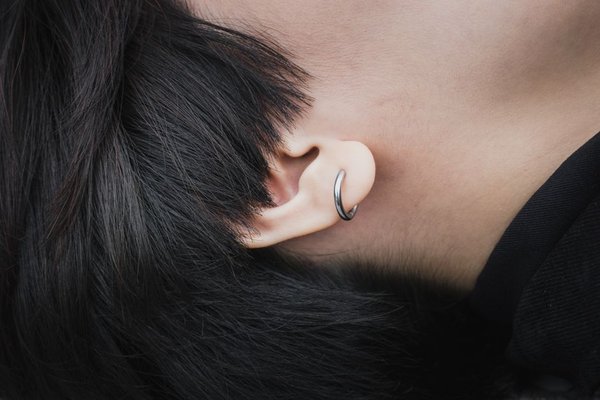
The easiest way to stop a stack from feeling random is to choose one anchor piece. It might be a medium hoop, a sculptural stud, a small drop, a colored stone, or a distinctive shape. Everything else should either echo it or give it breathing room.
Imagine a three-piercing lobe. Instead of using three equally bold earrings, place a small chunky hoop in the first hole, a tiny bezel-set stone in the second, and a simple metal dot in the third. The first piece carries the visual weight while the others create a gradual finish. This scale change makes a curated ear trend look polished rather than accidental.
Build a Shape Across the Ear
Think of the stack as a line your eye follows. You can create an upward sweep with pieces that become smaller toward the top, or use a larger conch or lobe piece as a center of gravity and keep surrounding jewelry quieter. Negative space matters too. An empty gap can make nearby earrings look more deliberate.
Repeat one detail without making everything match
Repeating a metal, stone color, shape, or proportion creates cohesion. A slim gold huggie, a tiny white stone and a small gold sphere are different, but their warm metal and compact scale tie them together.
Mixed metals can work too. Rather than dropping one silver piece into an otherwise gold ear, repeat each tone so the contrast looks intentional. How to mix gold and silver jewelry is a useful related topic if you want to explore that approach further.
Try Intentional Asymmetry
Your left and right ears do not need to mirror each other. One ear can carry the stronger statement while the other stays simpler, or both can share a theme without using identical placements.
A practical everyday combination might be three small pieces on one ear and a single hoop plus stud on the other. If you usually tuck your hair behind one side, place the stronger arrangement on the exposed ear. The result feels styled for you rather than built from a preset formula.
Match Jewelry Scale to Placement
Scale often matters more than quantity. Large pieces compete quickly in a small area, so use them selectively. Smaller studs and slim hoops can add detail in upper lobes and cartilage while the lowest lobe often handles more visual weight.
Before buying, compare hoop diameter and stud dimensions rather than relying only on product photos. A few millimeters can change how closely a hoop hugs the ear or how much space a stud occupies. An earring size guide is useful when planning proportions before ordering.
Style Healed and Healing Piercings Differently
A fashion refresh is not the same thing as changing jewelry in a fresh piercing. Healing piercings need appropriate jewelry, fit, and material quality, and they should not be swapped casually just to complete a look. If a piercing is new, irritated, swollen, or difficult to sleep on, let healing take priority and ask a qualified piercer before changing the jewelry.
For new piercings, reputable piercing guidance emphasizes properly fitted jewelry made from suitable, biocompatible materials. Implant-grade titanium is a common option, while suitable solid gold may also be appropriate when it meets piercing-quality standards. Plated jewelry is not a good choice for a fresh piercing.
Make the Stack Work With Real Life
A stack can look perfect in a close-up photo and still be annoying by the end of the day. Think about headphones, helmets, glasses, phone use and hair. Smooth, low-profile pieces can make daily wear easier, particularly in placements that tend to catch.
Your wardrobe matters too. Bold necklaces often pair well with a quieter ear, while minimalist clothing can leave room for more texture, mixed metals, or a small flash of color.
A Simple Formula for Reworking Your Current Stack
If your piercings are fully healed and safe to change, rebuild slowly. Start with the piece you wear most. Add one supporting piece in a different scale, then add a third only if the ear still has visual space. Step back from the mirror after each addition. If two pieces are fighting for attention, remove one instead of adding another.
This edit-first approach works because ear stacking is not about maximizing the number of earrings. Sometimes the improvement comes from replacing a bulky piece with a smaller one; sometimes it comes from leaving one piercing empty.
FAQ
How many piercings do you need for an ear stack?
Two piercings can be enough to create a clear stack. More piercings create more styling options, but they are not required for a balanced look.
Should all earrings in a stack be the same metal?
No. A single-metal stack is easy to coordinate, but mixed metals can look equally intentional when the tones are repeated instead of appearing as one isolated mismatch.
Can you change jewelry while a piercing is healing?
Do not change jewelry in a healing piercing simply for styling. Healing varies by placement and person, so follow your piercer’s guidance and have jewelry changed professionally when needed.
How do you keep an ear stack from looking cluttered?
Use one focal piece, vary the scale, repeat one or two visual details, and leave some negative space. If every earring is equally large or detailed, the ear can lose a clear focal point.
Build It Slowly and Let It Evolve
The most convincing ear stacks rarely look as though they were bought in one afternoon. They grow with your taste. Start with pieces you genuinely like, pay attention to proportion and placement, and edit whenever the balance feels off. That is what makes the look feel curated: not perfect symmetry or a fixed number of piercings, but a clear point of view that still leaves room to change.